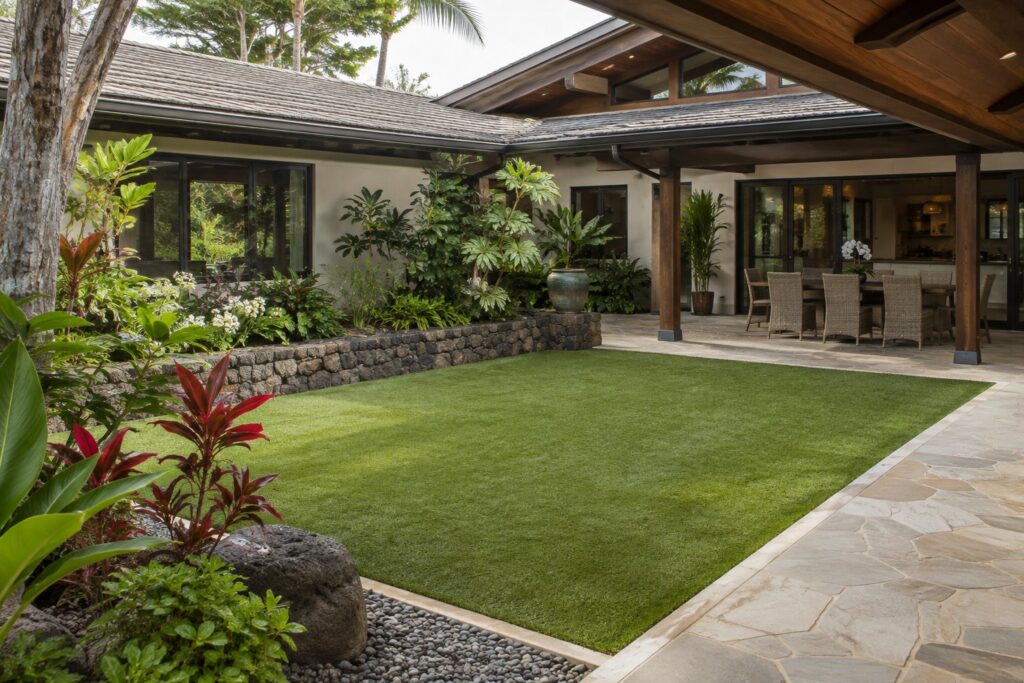
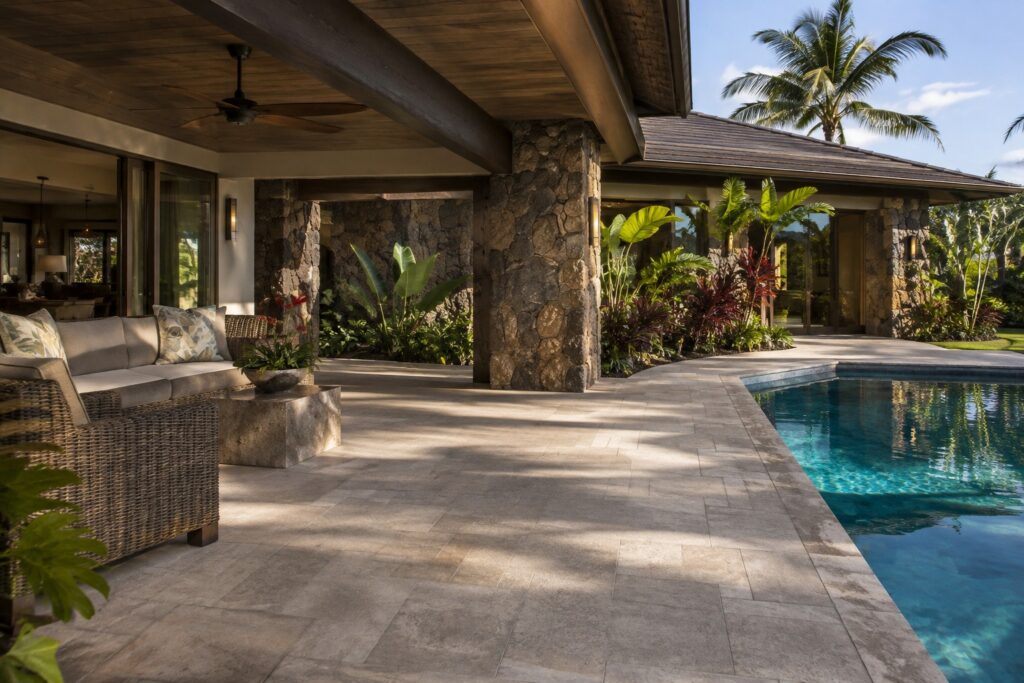
A coordinated outdoor finish can connect a driveway, entrance, lanai and pool area. Each area still needs its own specification. Vehicle loading, wet surfaces, drainage and everyday maintenance can change what the project team requires from the paving system.
Before requesting a bulk paver quote, divide the landscape into use zones. This keeps visual selections connected to the technical requirements and makes the quantities easier to check.
Start with how each space will be used
For a driveway, identify the expected vehicle use and the approved paving and base design. Do not choose thickness from appearance alone. The designer or contractor should establish the relevant requirements for the complete assembly.
For a lanai, consider furniture placement, transitions at doors, finish texture and the maintenance plan. For a pool surround, ask the project team to review the selected product’s wet-area performance information and other relevant requirements. A textured appearance alone does not prove a surface meets the project’s needs.
Use this selection sheet before combining quantities:
| Zone | Record before pricing |
|---|---|
| Driveway | Intended traffic, approved dimensions and thickness, base specification |
| Entry and paths | Format, pattern, transitions, edging and finish |
| Lanai | Surface finish, measured area, door thresholds and border details |
| Pool surround | Wet-area requirements, coping or edge pieces, product documentation |
Evaluate samples in the project setting
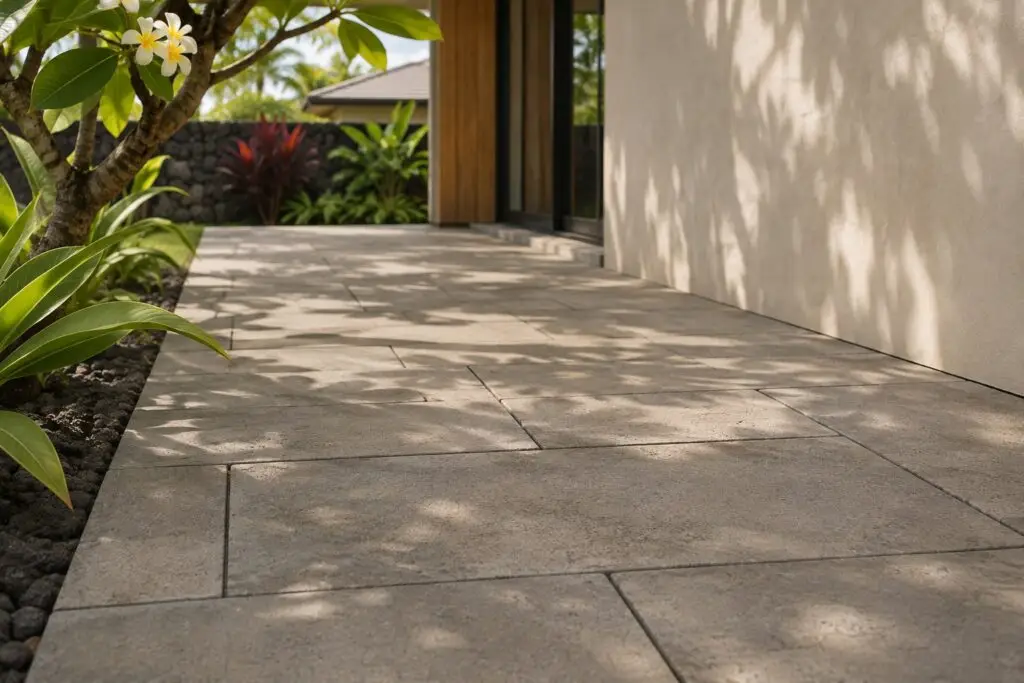
Ask whether samples are available for the shortlisted product, then review them beside the building’s wall, roof and timber finishes. Examine the actual surface rather than relying only on a small digital image.
For exposed areas, discuss surface temperature, cleaning and maintenance guidance with the manufacturer and project team. A color choice that looks right in a shaded sample display may be experienced differently in direct sun. Avoid treating a general “coastal” label as a substitute for product documentation.
Keep the supporting materials in the plan
The visible paving is one part of the outdoor assembly. Base materials, bedding, joints, edging and drainage details need to follow the approved design. Permeable paving also requires an appropriate system beneath the surface; selecting a paving unit alone does not establish the site’s drainage performance.
List related materials separately when requesting pavers and hardscape supply. Include wall units, steps and caps only where they appear in the approved scope.
Calculate quantities by finish and location
Separate the main field from borders and special pieces. Have the installer confirm allowances for cuts, breakage and future repairs, then show whether these are included in the total. Record any required color or sample approval before the order is confirmed.
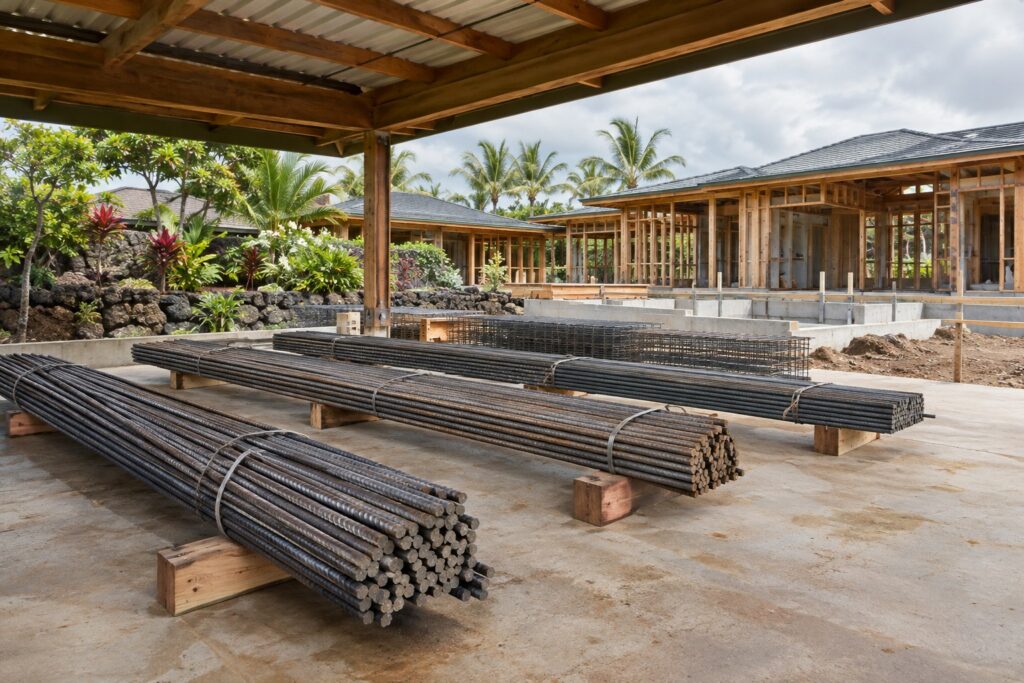
Pavers are heavy palletized materials, so the receiving plan matters. Identify unloading equipment, a suitable storage area and access to the installation zones. Ask how pack quantities affect the final order rather than assuming an exact measured area equals an exact pallet quantity.
Request a paver package quote with your zone schedule, formats, finishes, quantities and Hawaii delivery location. Include the approved performance requirements so the proposed products can be reviewed against them.