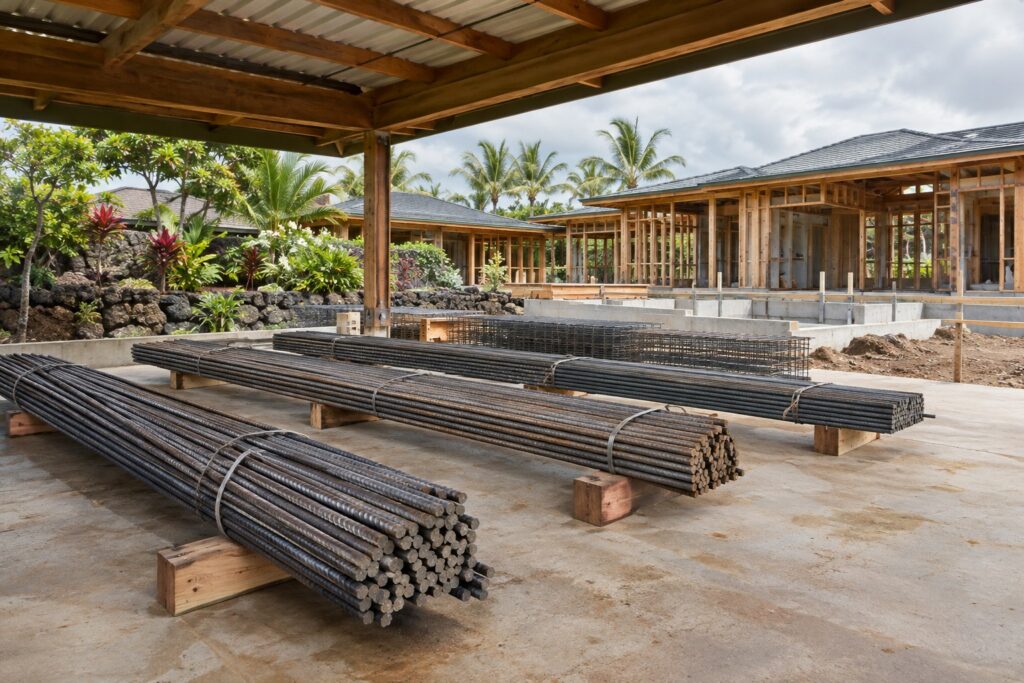

Two building material quotes can show different totals because they cover different products, quantities or delivery responsibilities. Before deciding which offer fits your Hawaii project, put both quotes against the same approved material schedule and receiving location.
The goal is to understand what your project would receive and what your team would still need to arrange. Mainland product pricing is one part of that review. Freight, destination handling and the final delivery scope also need to be clear.
Confirm that the products match
Start with the line items. Compare grade, dimensions, thickness, finish, model and required documentation. A roof panel with a different coating or a timber member with a different grade is a proposed alternative, even if the quantities match.
Ask your project team to review substitutions before treating them as equivalent. Keep accepted alternatives documented alongside the quote. Photos and broad descriptions are useful references, but they do not replace the specification for the product being purchased.
Next, check the unit. A price per sheet cannot be compared directly with a price per square foot without confirming sheet dimensions and coverage. A weight-based aggregate price needs a confirmed quantity basis before comparison with a volume-based offer.
Define the freight endpoint
Record where each quoted delivery responsibility ends. A shipment planned to a named port and a shipment with agreed jobsite delivery have different scopes. Ask which loading, destination handling and onward transport items are included, excluded or awaiting confirmation.
Use a simple comparison sheet:
| Review item | Record for each offer |
|---|---|
| Product schedule | Revision and any exceptions |
| Quantities | Unit, pack rounding and spare allowance |
| Material price | Stated amount and validity conditions |
| Freight | Route or scope and quoted endpoint |
| Destination arrangements | Included services and outstanding items |
| Unloading | Responsible party and required equipment |
| Container return | Applicable responsibility and timing requirements |
| Dates | Estimate, assumptions and unresolved dependencies |
Mark unknown amounts as “pending confirmation.” Treating an unpriced item as zero can make an incomplete offer appear less expensive.
Compare timing and storage needs
An estimated arrival window should be considered alongside the installation sequence and the site’s capacity to receive materials. A package arriving before covered storage is ready may create a practical problem even when the product price fits the budget.
Ask whether the proposed order arrangement suits your phases. Hawaii Materials Co. works with full-container orders; separate construction phases do not automatically mean partial shipments are available. Have the supply and freight plan reviewed before committing the construction team to a particular sequence.
Review the conditions before accepting
Read the quotation together with the supplier’s current policies and order terms. Check payment requirements, the point at which changes become restricted, estimated timing and delivery inspection responsibilities. Keep the accepted schedule and quote revision together.
For a useful comparison, ask each supplier to respond to the same material list and delivery brief. Request Hawaii project pricing with quantities, specifications and the receiving location so product pricing and freight can be reviewed together.